
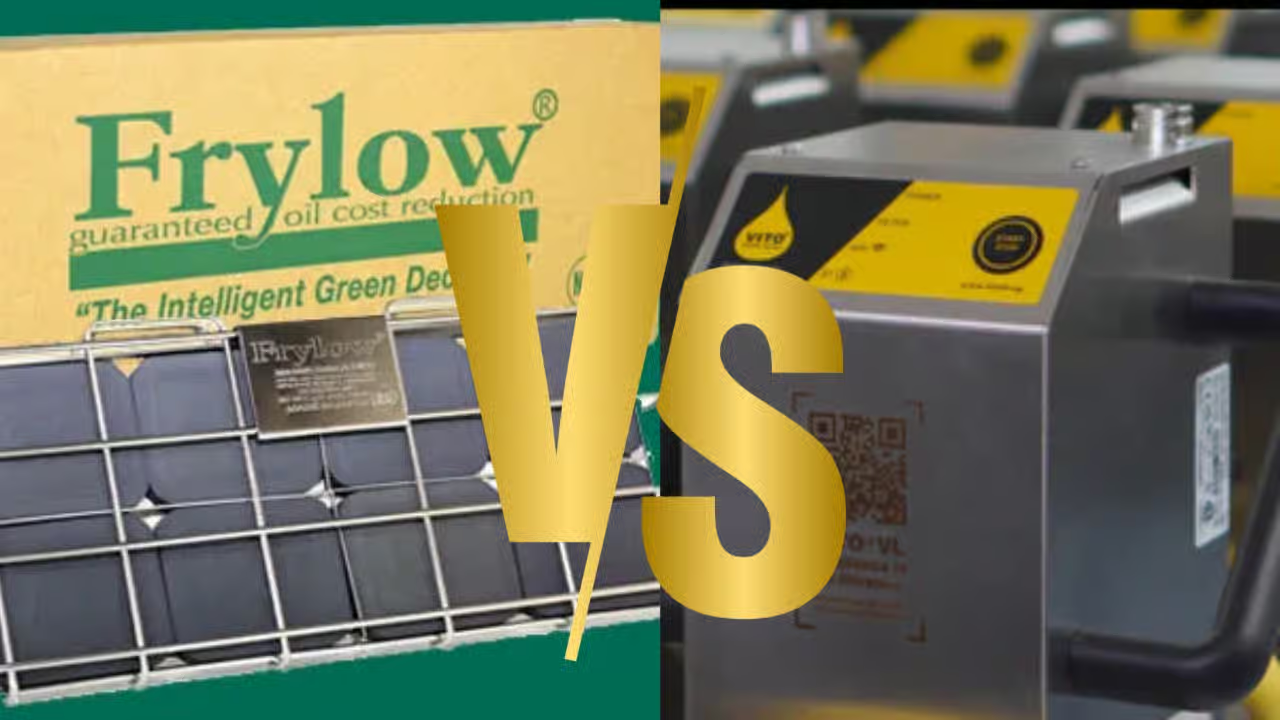

In the ever-evolving landscape of the food service industry, establishments continuously seek innovative solutions to enhance efficiency and reduce operational costs. Among the myriad of strategies available, optimizing frying oil usage stands out as a critical focus area due to its direct impact on both cost savings and product quality. Two popular products in this domain are Frylow and Magnesol, each offering unique benefits aimed at extending the life of frying oil.
Frylow is an advanced ceramic device designed to reduce oil absorption during the cooking process. By altering the molecular structure of frying oil, Frylow claims to extend its usable life significantly while also improving food quality by making it less greasy. The upfront investment in Frylow can be substantial; however, many users report that this cost is quickly offset by reduced frequency in oil changes and enhanced product consistency.
On the other hand, Magnesol is a synthetic magnesium silicate powder used for filtering impurities from frying oils. It functions by capturing particulate matter such as carbonized particles and fatty acids that degrade oil quality over time. Regular use of Magnesol can lead to clearer oils with extended usability periods without imparting any flavors or odors onto cooked foods.
When analyzing cost savings between Frylow vs Magnesol, several factors must be considered: initial investment costs, ongoing maintenance requirements, ease of use, environmental impact, and overall effectiveness in extending oil life. Frylow’s one-time purchase price may appear daunting compared to Magnesol’s recurring expense model; however, depending on usage volumes and frequency of operation within a kitchen environment—such as fast-food chains or high-volume restaurants—the long-term financial benefits could justify initial expenditures.
Magnesol presents itself as a more flexible option due to its lower entry barrier financially but requires consistent application alongside regular filtration processes for optimal results—a factor which could potentially increase labor costs if not managed efficiently.
Both products have been shown through various case studies across different types of foodservice operations worldwide—ranging from small cafes up through large-scale industrial kitchens—to deliver tangible improvements in terms of reducing overall expenditure related directly back towards purchasing new batches fresh off-the-shelf periodically throughout busy seasons annually otherwise necessary absent these interventions being implemented effectively beforehand instead thereof alternatively speaking here now today still yet again once more too indeed!
